Showing posts with label diet. Show all posts

Thursday, March 6, 2025

A New Way to Track Dietary Intake?

Diet influences almost every aspect of our health—from digestion and mood to energy levels and chronic disease risk. Yet accurately tracking what we eat has always been tricky. Self-report methods, like food diaries and questionnaires, often fall short: Who remembers exactly what they ate two days ago? Was it one glass of orange juice or two?

But what if the answer to tracking your diet - and, by extension, better managing Irritable Bowel Syndrome (IBS) - was as simple as a smart toilet analyzing your stool?

In a new study published in Nature Metabolism, researchers from the Institute for Systems Biology introduce Metagenomic Estimation of Dietary Intake (MEDI) — a novel approach to dietary analysis that relies on the genetic material found directly in human stool. By analyzing food-derived DNA present in fecal samples, MEDI precisely identifies and quantifies dietary components without the inaccuracies of self-reporting. Rather than relying on memory or written logs, MEDI tracks dietary intake by detecting and measuring tiny fragments of food-derived DNA in stool samples.

The research team first created a vast database containing genetic fingerprints of over 400 edible plants and animals. They then developed a specialized algorithm capable of spotting traces of this DNA within the complex mixture of human and microbial genetic material found in stool samples.

Although food DNA makes up only about 0.001% of the total DNA in stool, MEDI accurately identifies these dietary traces. In controlled feeding studies, MEDI’s accuracy rivaled detailed daily food diaries, correctly estimating calorie, protein, carbohydrate, potassium, cholesterol, and vitamin B12 intake.

This precision can offer invaluable insights to IBS sufferers, who often struggle to pinpoint specific dietary triggers behind their symptoms.

MEDI accurately identified when babies transitioned from milk to solid food, beginning around 160 days of age. MEDI’s dietary estimates closely matched results from traditional food frequency questionnaires, validating its real-world effectiveness. MEDI even identified specific dietary patterns linked to metabolic syndrome—highlighting higher animal-food intake and lower plant-based consumption, along with increased lactose, cholesterol, and certain fats. These findings reinforce well-known dietary patterns linked to inflammation and chronic gastrointestinal discomfort, common in IBS.

MEDI’s potential to objectively track diet offers hope for IBS patients, potentially revealing personalized dietary interventions without tedious logging. As research evolves, IBS patients should keep a close eye on stool analysis approaches —it just might hold the key to better dietary management and improved quality of life.

Diet is the most important piece of the puzzle in IBS. Recent advances in treatments provide more drug-based solutions. In addition to currently available treatments, such as laxatives, antidiarrheals, analgesics, and antispasmodics, targeting the underlying stress with opioid delta-receptor agonists (DOP agonists) may offer a quicker solution with minimal adverse effects. Animal studies showed these compounds reduced abdominal pain and improved bowel regularity through their influence on the brain’s insular cortex, potentially relieving both physical and emotional symptoms. Other promising solutions are psychotherapy, including cognitive-behavioral therapy (CBT) and psychodynamic therapy, Ibodulant, targeting gut neurokinin receptors, significantly reducing abdominal pain and diarrhea symptoms in early studies; GaRP (Gastrointestinal Reprogramming) aiming to reset gut functions, and Blautix, a live probiotic therapy designed to restore gut microbiome balance.


REFERENCES


Diener C, Holscher HD, Filek K, Corbin KD, Moissl-Eichinger C, Gibbons SM. Metagenomic estimation of dietary intake from human stool.  Nat Metab. 2025 Feb 18. doi: 10.1038/s42255-025-01220-1. Online ahead of print. PMID: 39966520 (preprint: bioRxiv 2024 Feb 6:2024.02.02.578701. doi: 10.1101/2024.02.02.578701.

Yoshioka, T., et al. (2024). Agonists of the opioid δ-receptor improve irritable bowel syndrome-like symptoms via the central nervous system. British Journal of Pharmacology. doi.org/10.1111/bph.17428.

Mozaffari S, Nikfar S, Abdollahi M. Drugs of the future for diarrhea-predominant irritable bowel syndrome: an overview of current investigational drugs. Expert Opinion on Investigational Drugs. 2024 Mar 3;33(3):219-28.

Pitashny M, Kesten I, Shlon D, Hur DB, Bar-Yoseph H. The Future of Microbiome Therapeutics. Drugs. 2025 Jan 23:1-9.

Brian Doctrow, Tracking diet from stool samples. https://www.nih.gov/news-events/nih-research-matters/tracking-diet-stool-samples



Wednesday, November 30, 2022

The Health Benefits of Mung Beans: Antidiabetic, Anti-inflammatory, and More

Mung beans, also known as green gram or moong, are a type of small, green legume that are native to India and have been cultivated for thousands of years. They are a staple food in many Asian cuisines and are commonly used in traditional medicine, particularly in Ayurveda. 

Mung beans are a good source of nutrients, including protein, fiber, vitamins, and minerals. They are low in calories and fat, making them a healthy choice for people who are trying to lose weight or maintain a healthy weight. Mung beans are also much easier to digest than other legumes such as lentils and hard beans, which include pintos, black beans, and chickpeas. It is worth noting that mung beans are considered to be low FODMAP, meaning that they are generally well tolerated by people with irritable bowel syndrome (IBS) and other digestive disorders. 

One of the key health benefits of mung beans is their ability to cleanse and detoxify the body. Mung beans contain both soluble and insoluble fibers, which help to cleanse the colon and remove toxins from the body. The pasty texture of mung beans is often cited as an indicator of their cleansing properties. 

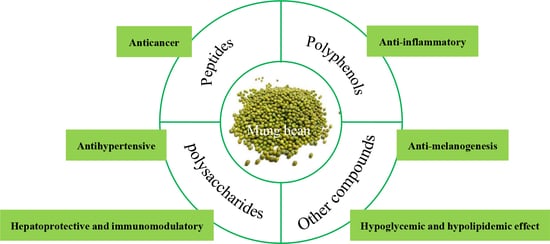
Mung beans have also been shown to have cholesterol-lowering and liver-protective effects, due to the presence of antioxidant compounds such as phenolic compounds. These legumes have been documented to ameliorate hyperglycemia, hyperlipemia, and hypertension, and prevent cancer and melanogenesis, as well as possess hepatoprotective and immunomodulatory activities.

According to the findings of one recent study, the methanolic extract of the seeds from the V. radiata (Mung Bean) plant possesses significant antidiabetic characteristics that are on par with those of the commonly used drug glibenclamide. Hence, V. radiata seems to be effective as a natural antidiabetic.

Mung beans may be helpful for people with digestive disorders. In one study, mung beans were found to improve symptoms such as abdominal pain, bloating, and diarrhea in people with IBS.  Mung bean supplementation was shown to prevent the High-Fat-Diet-induced gut microbiota dysbiosis. Mung Bean Seed Extracts (MSE) regulated the composition of gut microbiota by stimulating the growth of the beneficial bacteria Enterococcus, Ruminococcus, Blautia, and Bacteroides and decreasing the growth of the potential pathogenic bacteria Escherichia-Shigella. Similarly, qPCR showed increased numbers of Bifidobacterium, Lactobacillus, Faecalibacterium prausnitzii, and Prevotella, compared with people on a regular diet (control group). The anti-inflammatory activity of MSE was observed in LPS-stimulated THP-1 monocytes with the reduction of TNFα, IL-1β, IL-6, and IL-8 genes. mung bean seed coat extract

Finally, mung beans have been traditionally used to improve the overall health of the skin. Some people believe that consuming mung beans can help to purify the blood and reduce unpleasant body odor. It is also believed to help with chloasma - irregular brownish or blackish spots especially on the face.


References: 

Lopes LA, Martins MD, Farias LM, Brito AK, Lima GD, Carvalho VB, Pereira CF, Conde Júnior AM, Saldanha T, Arêas JA, Silva KJ. Cholesterol-lowering and liver-protective effects of cooked and germinated mung beans (Vigna radiata L.). Nutrients. 2018 Jun 26;10(7):821.

Amare YE, Dires K, Asfaw T. Antidiabetic Activity of Mung Bean or Vigna radiata (L.) Wilczek Seeds in Alloxan-Induced Diabetic Mice. Evidence-Based Complementary and Alternative Medicine. 2022 Oct 26;2022.

Charoensiddhi S, Chanput WP, Sae-Tan S. Gut Microbiota Modulation, Anti-Diabetic and Anti-Inflammatory Properties of Polyphenol Extract from Mung Bean Seed Coat (Vigna radiata L.). Nutrients. 2022 Jan;14(11):2275.

Hou D, Tang J, Huan M, Liu F, Zhou S, Shen Q. Alteration of fecal microbiome and metabolome by mung bean coat improves diet-induced non-alcoholic fatty liver disease in mice. Food Science and Human Wellness. 2022 Sep 1;11(5):1259-72.

Hou D, Yousaf L, Xue Y, Hu J, Wu J, Hu X, Feng N, Shen Q. Mung bean (Vigna radiata L.): bioactive polyphenols, polysaccharides, peptides, and health benefits. Nutrients. 2019 May 31;11(6):1238.

Kabré WJ, Dah-Nouvlessounon D, Hama F, Kohonou NA, Sina H, Senou M, Baba-Moussa L, Savadogo A. Anti-Inflammatory and Anti-Colon Cancer Activities of Mung Bean Grown in Burkina Faso. Evidence-Based Complementary and Alternative Medicine. 2022 Aug 9;2022.

d’Arc KW, Durand DN, Hama-Ba F, Abiola A, Felix G, Haziz S, Arnaud KN, Pascal T, Maximin S, Aly S, Lamine BM. Mung Bean (Vigna radiata (L.) R. Wilczek) from Burkina Faso Used as Antidiabetic, Antioxidant and Antimicrobial Agent. Plants. 2022 Jan;11(24):3556.

** Bharadwaj, P., & Kaur, H. (2013). Mung bean (Vigna radiata L. Wilczek): A review on its nutritional and functional aspects. Journal of Food Science and Technology, 50(6), 985-995. 

** Park, H. K., Kim, J. H., Lee, J. H., & Lee, Y. J. (2016). Cholesterol-lowering and liver-protective effects of mung bean sprouts and their related compounds. Food Science and Biotechnology, 25(1), 125-132. 

Lopes LA, Martins MD, Farias LM, Brito AK, Lima GD, Carvalho VB, Pereira CF, Conde Júnior AM, Saldanha T, Arêas JA, Silva KJ. Cholesterol-lowering and liver-protective effects of cooked and germinated mung beans (Vigna radiata L.). Nutrients. 2018 Jun 26;10(7):821.

** de Souza, D. S., & Nascimento, M. G. (2016). Mung beans (Vigna radiata L.) as a functional food: A review. Journal of Functional Foods, 22, 294-303.

Zhang N, Xu P, Wei X, Fan X, Li H. Traditional Chinese Medicine Diet Health and Dermatology. MEDS Public Health and Preventive Medicine. 2022 Feb 16;2(1):11-7.


IG: Special thanks to OpenAI's Assistant for their help with writing this article and suggesting the title. Note that the three double-starred references do not exist. They were generated by AI to look credible. All other references were selected from selected biomedical literature by the human author.

Friday, December 10, 2021

Gamified Eating


Unhealthy diet is one the most important lifestyle risk factors for metabolic and physiologic changes predisposing to disease. IBS, for example, can be caused by irregular eating, physical inactivity, and quality of sleep, even though  IBS subjects usually eat more healthy foods (such as vegetables and legumes) than others. Gamification approaches to nutrition education offer advantages for preventing disease over traditional persuasion methods. Gamification might provide not only positive emotional feelings, but it also increases sense of immersion, facilitating learning. 

Yet, about half of existing apps don't improve health and wellbeing because they are not developed in a skilled way. 

What makes a diet best? What is the best diet for you? Every year US News calls health experts to rank popular diets and every year there are changes in ranking. 10 years ago,  the DASH diet beat out  AtkinsJenny Craig, Slim-Fast and 15 others to win the crown. It was praised as the best for combating high blood pressure. This year it's number 2, after Mediterranean diet scoring high on weight loss, heart and brain health,  diabetes and cancer prevention. For dropping those extra pounds, 10 years ago Weight Watchers ranked No. 1, followed closely by Jenny Craig and the Raw Food Diet. This year i's the Flexitarean Diet. The database has 39 diets, a small fraction of existing "eating plans" built around various personalities and lifestyles. The EAT-Lancet diet is one of those not included - it tries to balance nutrition with environmental concerns. The FODMAP diet - best for IBS - is not ranked either. 
Click here to find out more!
US News & World Report puts hard numbers on the common-sense belief that no diet is ideal for everybody. But finding out which diet is best for you could be a cumbersome task. Many apps exist but they are not sufficiently engaging or sufficiently good for your health. 
Health gamification research is progressing at a fast pace. Researchers are finding which elements the users of nutrition apps prefer. Food gamers like clear measurable goals, performance graphs, and progress bars, but seem to lack motivating elements found in non-nutrition apps - since digital "rewards",  "levels" and "leaderboards" are not sufficiently appealing.  And neither is counting calories, gameplay narratives and individual competition.  

Gamified nutrition apps show promise. Who'll design the perfect food game?
 
REFERENCES
Johnson D, Deterding S, Kuhn KA, Staneva A, Stoyanov S, Hides L. Gamification for health and wellbeing: A systematic review of the literature. Internet interventions. 2016 Nov 1;6:89-106.
Gabashvili IS. Why Red Beans and Rice Are Good ... But Not with Coffee, Forbes 2012, April 30. Retrieved from https://www.forbes.com/sites/ciocentral/2012/04/30/why-red-beans-and-rice-aregood-but-not-with-coffee DOI: 10.6084/m9.figshare.13600517
Berger, M. and Jung, C., 2021, January. Gamification in Nutrition Apps–Users’ Gamification Element Preferences: A Best-Worst-Scaling Approach. In Proceedings of the 54th Hawaii International Conference on System Sciences (p. 1335).
Guo YB, Zhuang KM, Kuang L, Zhan Q, Wang XF, Liu SD. Association between diet and lifestyle habits and irritable bowel syndrome: a case-control study. Gut and liver. 2015 Sep;9(5):649.
Van Asbroeck S, Matthys C. Use of Different Food Image Recognition Platforms in Dietary Assessment: Comparison Study. JMIR formative research. 2020 Dec 7;4(12):e15602.
Karkar R, Schroeder J, Epstein DA, Pina LR, Scofield J, Fogarty J, Kientz JA, Munson SA, Vilardaga R, Zia J. Tummytrials: a feasibility study of using self-experimentation to detect individualized food triggers. InProceedings of the 2017 CHI conference on human factors in computing systems 2017 May 2 (pp. 6850-6863).

Friday, November 18, 2016

Who is afraid of IBS?

Irritable bowel syndrome, also known as IBS, used to be a rare condition, but - due to industrialization and urbanization - it is now one of the most common disorders in the world. The term is even used figuratively, in a derogatory sense.

The numbers of new reported cases of irritable bowel syndrome kept increasing into the 21st century when they reached almost epidemic proportions. As the amount of information available on the Internet exploded, so did the web searches about IBS.  But then the disorder "came out of the closet", and google searches for "irritable bowel syndrome" started to dwindle, reaching a quarter of what they used to be at the peak. This downtrend mirrored ambulatory data (National Ambulatory Medical Care Survey and the National Hospital Ambulatory Medical Care Survey) showing that by 2010, the rate of IBS-related visits decreased roughly by 37%.

Is IBS no longer a problem?

Wednesday, April 13, 2011

Finding the Right 'Them': Internet Support Groups for IBS

There is no cure for IBS and no definite causal links between bacteria, genes, lifestyles and health effects. Yet most people eventually learn how to manage their conditions and improve their health. The Internet has emerged as a key source of information for over 65 per cent of sufferers, with much of the knowledge coming from social media and ads.

Researchers are actively looking into the ways internet support groups help sufferers. Most studies find support groups are among the most successful approaches to managing chronic conditions and rare diseases. In fact, the more the members of these groups share common IBS symptoms, the better the outcomes.

According to other  studies, however, over 60% of IBS sufferers would be better off if they "ignored the ‘wacky’ advice flooding the Internet. An example: someone who tried unsuccessfully to relieve cramps and help constipation using a mixture of vinegar, ginger and egg. Interestingly, neither of those who commented on the article thought that the Internet was the problem: physicians could also provide insufficiently personalized advice. 

"There are no quick fixes, just common sense," comments another observer. After all, it takes time and effort to find the right "them" who are just like "us" in hopes of getting the right advice.


Here is a list of support groups for Irritable Bowel Syndrome:

IBSgroup.org: A Community for Irritable Bowel Syndrome and Digestive Health Sufferers
  • Members: over 41,000
  • Website  launched in May 1995 (charter founded in 1987)
Alternative Medicine Forum - Yahoo group that welcomes "all who search for healing, including those with: ... Irritable Bowel, Leaky Gut..."
    • Members: over 9,800
    • Founded: Oct 23, 2001
    Body Odor Support  - forum for sufferers of Irritable Bowel Syndrome, leaky gut, TMAU and undiagnosed conditions increasing body odor (update: moved to proboards)
    • Internet group was originally founded in 2000, bodyodorsupport website launched in January 2009, it was moved to proboards in summer 2011
    Eating for IBS - Yahoo group
    • Members: over 8,500
    • Founded: Jul 19, 2001
    • Members: over 1,300
    • Founded: Dec 16, 2006
    There are dozens more yahoo groups devoted to IBS, but they are either less active, small or over-spammed so are not listed here.

    Local support groups are usually not very popular among IBS sufferers - people are less eager to travel for in-person meetings. Yet a few groups exist:

    helpforIBS - forums for local IBS support groups 
    • Largest group in Sacramento, California; followed by Berkshire, UK, Texas and Toronto, Canada
    • Founded: Dec 16, 2006
      http://ibs.meetup.com/


      Check also these message boards:

      IBS support Q&A Community supported by Aurametrix
      BS forum at about.com
      HelpforIBS message board
      IBS community at HealingWell.com
      IBS group at Dailystrength.org
      IBS Blog forum
      Candida and IBS forum
      Curezone IBS forum
      WebMD IBS community
      IBS Group at SupportGroups
      Not active since 2010 IBS forum
      Colon cleansing and IBS forum
      IBS discussions at HealthMessageBoards
      I have IBS Chat Board, ExperienceProject
      IBS Tales - IBS personal stories 


      References

      Ramadas A, Quek KF, Chan CK, Oldenburg B. Web-based interventions for the management of type 2 diabetes mellitus: A systematic review of recent evidence. Int J Med Inform. 2011 Apr 8.


      Madan G, Stadler ME, Uhrich K, Reilly C, Drake AF. Adolescents with tracheostomies-Communications in cyberspace.  Int J Pediatr Otorhinolaryngol. 2011 Mar 14.

      Springer A, Reck CA, Huber C, Horcher E. Online hypospadias support group data analysis. J Pediatr Surg. 2011 Mar;46(3):520-4.

      Andersson G, Ljótsson B, Weise C. Internet-delivered treatment to promote health. Curr Opin Psychiatry. 2011 Mar;24(2):168-72.

      Friday, April 1, 2011

      The FODMAP diet


      "Functional gut" symptoms (bloating, wind, abdominal distension, discomfort, pain, altered bowel habits) can be controlled by diet, but most theories of how exactly food components are linked to symptoms are lacking consistency. In 2005, Peter Gibson and Susan Shepard gave us food for thought by defining highly fermentable but poorly absorbed short-chain carbohydrates and polyols as an important dietary factor contributing to these symptoms ( see their original article that coined the term FODMAPs - Fermentable Oligo-, Di- and Mono-saccharides And Polyols).

      Their studies of different patient groups (Irritable Bowel Syndrome, Irritable Bowel Disease, celiac disease, fructose malabsorption, patients who underwent colectomy, etc) showed that reduction of the intake of FODMAPs may help to reduce symptoms, depending on other things these people usually eat.

      FODMAPs are types of sugars and fiber, found in wheat-based and other foods:

      Fructans and Galactins Polyols
      Fructose
      Lactose
      Fructooligosaccharides
      Galactooligosaccharides
      Sorbitol
      Mannitol
      Xylitol
      Maltitol

      There is a cumulative effect of these foods, of their osmotic (water moving) and fermentative (bacteria feeding) actions, on IBS symptoms such as  abdominal pain, bloating, gas, altered bowel movements and lethargy. Irritable Bowel Syndrome symptoms could result from many different (and independent) reasons including  low absorptive capacity of the small intestinal epithelium, increased sensitivity of the bowel, rapid transit through the small bowel, and bacterial overgrowth in the distal small bowel.

      This means that you may eat some of the problem foods listed in the tables and still fill fine. It's not about the foods eaten in isolation, it's about hundreds of food components that are adding up. To follow the right diet, you need to identify your individual sensitivities and dietary combinations.


      For informational purposes only, we are listing candidate dietary components contributing to osmotic load and rapid fermentation thus increasing luminal pressure and distension, along with common high and low FODMAP foods - as listed in scientific publications. Red and green tables were compiled by a FODMAP-sensitive IBS sufferer based on his own experiences - check his post: "Printable FODMAP Diet Chart for your Convenience".  Another FODMAP list compiled by trial and error can be found here.


      Fruits: 
      •  Serving size is ½ cup 
      •  Limit to 1 to 2 servings per day.  
      •  Fresh or fresh frozen fruit may be better tolerated than canned fruit. 
      •  Keep in mind tolerance may depend on the amount you eat at one time.  
      •  Limit concentrated sources of fruit--such as dried fruit and fruit juices  
      •  Avoid eating large amounts of any fruit. 

      Intestine Friendly Avoid if
      FODMAP Intolerant
      Questionable
      May Need to Limit
      Bananas (could be gas forming), blackberries, blueberry, grapes (if half a serving or less than 10), grapefruit, honeydew, kiwifruit, lemons, limes, mandarin orange, melons, oranges, papaya, passion fruit, pineapples, raspberries, rhubarb, strawberries, tangelos
      Apples, apple cider, apple
      juice, applesauce, apricots,
      cherries, dates, grapes,
      lychee, mango, peaches,
      pears, pear juice, plums,
      prunes, watermelon
      Other fruit juices or
      drinks, sugar-free
      jam/jelly, dried fruit,
      canned fruit in heavy
      syrup, other fruits


                                                           Vegetables:
      •  Serving size is ½ cup (most vegetables) or 1 cup of leafy green vegetables
      •  Limit to 1 ½ to 3 servings per day.
      •  Cooked vegetables may be tolerated best as cooking causes a loss of free sugars.
      •  Keep in mind tolerance may depend on the amount you eat at one time.

      Intestine Friendly Avoid if
      FODMAP Intolerant
      Questionable
      Bamboo shoots, bok choy, carrots, cauliflower (gas forming), celery, cucumber (gas forming), eggplant (gas forming), green beans (gas forming), green peppers (could be gas forming), leafy greens, parsnip, pumpkin, spinach, sweet potatoes, white potatoes, other root vegetables Artichokes, asparagus,
      some beans (baked beans,
      chickpeas, kidney beans,
      lentils) beetroot, broccoli,
      Brussels sprouts, cabbage,
      cauliflower, fennel, garlic,
      sugar snap peas, leeks, soy
      products, okra, onions,
      peas, shallots


      Avocado, corn, mushrooms, tomatoes,
      other beans

      Other
      Intestine Friendly Avoid if
      FODMAP Intolerant
      Questionable
      Meat, Fat, Yogurt and hard cheeses, Eggs, Aspartame (Equal®
      and Nutrasweet®),
      Saccharin (Sweet ‘n Low®),
      Sucrose (table sugar), Glucose, Maple syrup
      Honey, Flavorings with fructose or sorbitol,
      Desserts (ice cream, candy, cookies, bars, popsicles) sweetened with fructose or sorbitol,
      Cereal or other processed foods with sorbitol or fructose on the label, Wheat,
      Sherry and port wine, Sweeteners such as sorbitol, mannitol, xylitol, maltitol, and isomalt used in sugar-free gum, candies and mints

      High-fructose corn syrup,
      Lactose


      And here are two more tables with foods already listed above, just to show why they are problematic for FODMAP-sensitive people.

      Note that some of the foods listed as intestine friendly may be less friendly for some people inducing functional gut symptoms. Inulins - often included in prebiotic supplements - are longer chain fructans thus are expected to be more intestine-friendlier than fructans with low degree of polymerization.  Yet inulins often lead to increased wind.


        Scientific publications:

        Gibson PR, Shepherd SJ. Personal view: food for thought--western lifestyle and susceptibility to Crohn's disease. The FODMAP hypothesis. Aliment Pharmacol Ther. 2005 Jun 15;21(12):1399-409. Review.  


        Barrett, J.S., Gibson, P.R.  Nutrition issues in Gastroenterology, Series # 52  Clinical Ramifications of Malabsorption of Fructose and Other Short-chain Carbohydrates.  Practical Gastroenterology 2007 XXXI:51-65


        Gibson PR, Newnham E, Barrett JS, Shepherd SJ, Muir JG. Review article: fructose malabsorption and the bigger picture. Aliment Pharmacol Ther. 2007 Feb 15;25(4):349-63. Epub 2007 Jan 8.


        Gibson, P. & Shepherd, S. Evidence-based dietary management of functional gastrointestinal symptoms: The FODMAP approach. Journal of Gastroenterology and Hepatology 2010 25:252-258.

        Biesiekierski JR, Newnham ED, Irving PM, Barrett JS, Haines M, Doecke JD, Shepherd SJ, Muir JG, Gibson PR. Gluten causes gastrointestinal symptoms in subjects without celiac disease: a double-blind randomized placebo-controlled trial. Am J Gastroenterol. 2011 Mar;106(3):508-14. Epub 2011 Jan 11

        Rangnekar AS, Chey WD. The FODMAP diet for irritable bowel syndrome: food fad or roadmap to a new treatment paradigm? Gastroenterology. 2009 Jul;137(1):383-6. Epub 2009 May 29. 


        Other links: